
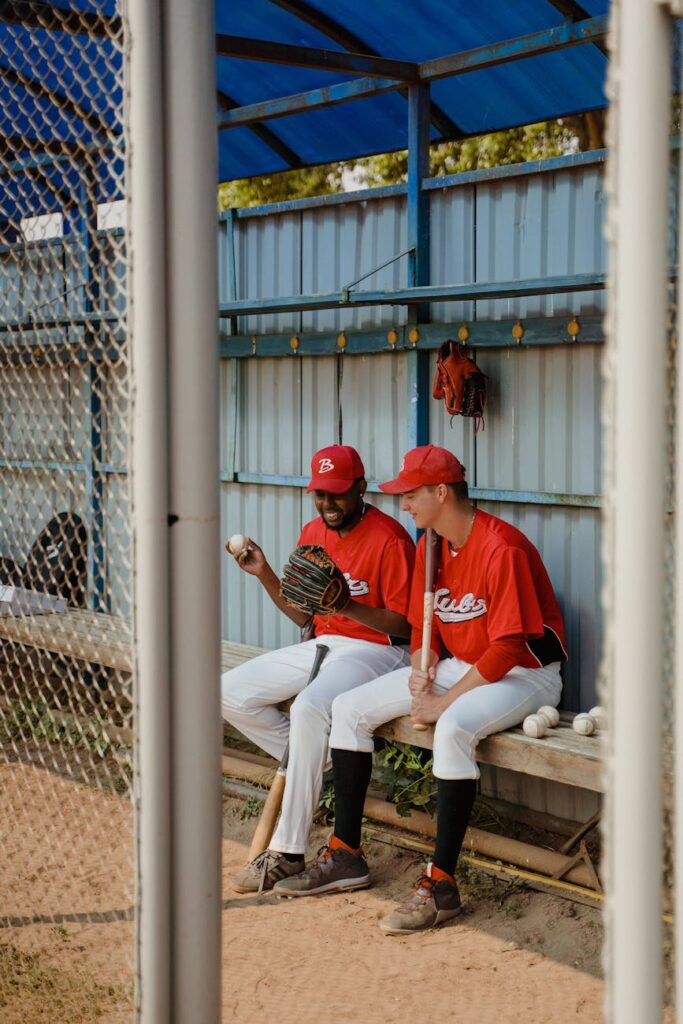
The lifeblood of any Major League Baseball franchise lies within its farm system. Fans and front offices alike obsess over prospect performance trends, constantly seeking the next superstar to anchor their lineup or bolster their pitching rotation. Analyzing these minor league trajectories requires more than just looking at surface-level statistics; it demands a nuanced understanding of environmental factors, developmental plateaus, and the transition from prospect hype to tangible big-league impact.
In this article, we delve deep into the methodologies behind evaluating prospect development. Whether you are a dynasty league manager or a casual observer curious about the future of your favorite team, understanding these trends is essential. We will examine how to interpret statistical growth, the importance of league-adjusted data, and why the “eye test” remains an indispensable tool for scouts and analysts tracking the future stars of the diamond.
Sommaire
ToggleUnderstanding statistical variance in minor league baseball
Interpreting prospect statistics can be incredibly misleading without proper context regarding the level of play and park factors. A hitter posting an impressive OPS in the hitter-friendly Pacific Coast League might be masking significant flaws, while a pitcher showing a high ERA in the pitcher-heavy Texas League could be demonstrating elite stuff. Analysts must leverage advanced metrics like wRC+, FIP, and K-BB% to strip away external noise and uncover true talent levels.
Furthermore, developmental plateaus are a natural part of the journey through the minor leagues. Players frequently experience dips in performance when they are promoted to a new level as they adjust to increased competition and refined scouting reports. Evaluating a prospect’s performance trend requires looking at the consistency of their approach over time, rather than reacting impulsively to short-term statistical slumps or sudden, unsustainable hot streaks.
Key metrics for evaluating prospects
- wRC+ (Weighted Runs Created Plus): Essential for comparing hitters across different league environments and ballparks.
- K-BB%: A more stable predictor of future pitcher success than ERA, highlighting command and stuff.
- BABIP (Batting Average on Balls In Play): Crucial for identifying if a player’s batting average is driven by unsustainable luck or genuine skill.
- Exit Velocity and Hard Hit Rate: Leading indicators of power potential that often precede improvements in traditional counting stats.
The intersection of physical maturity and technical refinement
Prospect evaluation is never purely about what happens in the box score; it is heavily influenced by physical development and the refinement of technical skills. Young prospects often display raw talent that needs significant polishing, such as an outfielder with elite speed who struggles with defensive reads or a pitcher with a power fastball who lacks secondary pitch command. Tracking how a prospect improves these specific facets is often more predictive than their seasonal batting average.
Strength and conditioning programs now play a larger role than ever in farm systems. When assessing performance trends, it is vital to note physical maturation, which can lead to increased power output or improved recovery times for pitchers. Organizations that excel at this integration often see a higher success rate in turning raw prospects into major league contributors, proving that player development is an ongoing, multi-dimensional process that evolves throughout a player’s tenure in the minors.
For further information, see Top baseball prospects expected to shine in upcoming drafts
Comparing prospect development strategies
Different organizations employ distinct philosophies when it comes to aggressively promoting prospects versus holding them back for further seasoning. Some teams prefer to challenge young players, exposing them to advanced levels early to force rapid adaptation. Others adopt a conservative approach, ensuring players master each level before moving them up, which can help build confidence and refine specific mechanical adjustments without the pressure of elite competition.
Comparative analysis of development philosophies
| Strategy | Key Focus | Potential Benefit | Main Risk |
|---|---|---|---|
| Aggressive Promotion | Facing elite competition | Rapid maturation | Developmental setbacks |
| Conservative Development | Building mastery/confidence | High floor, consistency | Stagnation/Lack of urgency |
The essential role of scouting and the eye test
While data analytics provides the foundation for modern prospect evaluation, it cannot replace the invaluable perspective of professional scouts. The eye test is critical for identifying intangibles such as baseball IQ, work ethic, and the ability to make in-game adjustments—qualities that do not always manifest in a spreadsheet. A player might have perfect launch angle metrics but lack the mental fortitude to overcome a persistent failure in their approach, and a scout is often the first to notice these warning signs.
Combining the objective data with subjective scouting reports creates a comprehensive view of a prospect’s ceiling and floor. It is in this synthesis that the most accurate predictions are made. When performance data contradicts a scout’s assessment, it usually indicates either a hidden talent or a masked vulnerability, prompting further investigation. This holistic approach ensures that teams and fans have the best possible understanding of a prospect’s potential path to the Major Leagues.
Anticipating the future of farm system analysis
As technology continues to advance, the landscape of prospect evaluation will shift toward even more granular data, such as tracking body movement mechanics and cognitive processing speed. We are already seeing the integration of biomechanical data into coaching, allowing organizations to pinpoint mechanical flaws before they even manifest as negative performance trends in the minors. This shift will make it easier to identify which prospects have the mechanical efficiency to thrive at the highest level.
Ultimately, analyzing prospect trends remains a blend of science and art. It requires patience, an eye for detail, and the understanding that development is rarely linear. As you continue to track the prospects in your favorite team’s system, remember to look beyond the top-line numbers and consider the broader context of their developmental journey. The most promising prospects are often those showing incremental, consistent improvements in their process, rather than those relying solely on raw, unrefined physical tools.
Staying informed about these developmental trends is the best way to gain an edge in understanding the future of the sport. We encourage you to dig deeper into the data provided by independent prospect outlets and compare them with your own observations. Be sure to check our other articles on organizational depth charts and trade deadline analysis to keep your knowledge of the baseball landscape sharp and up to date.